Car Shipping Pickup and Delivery Day: What Happens, Step by Step
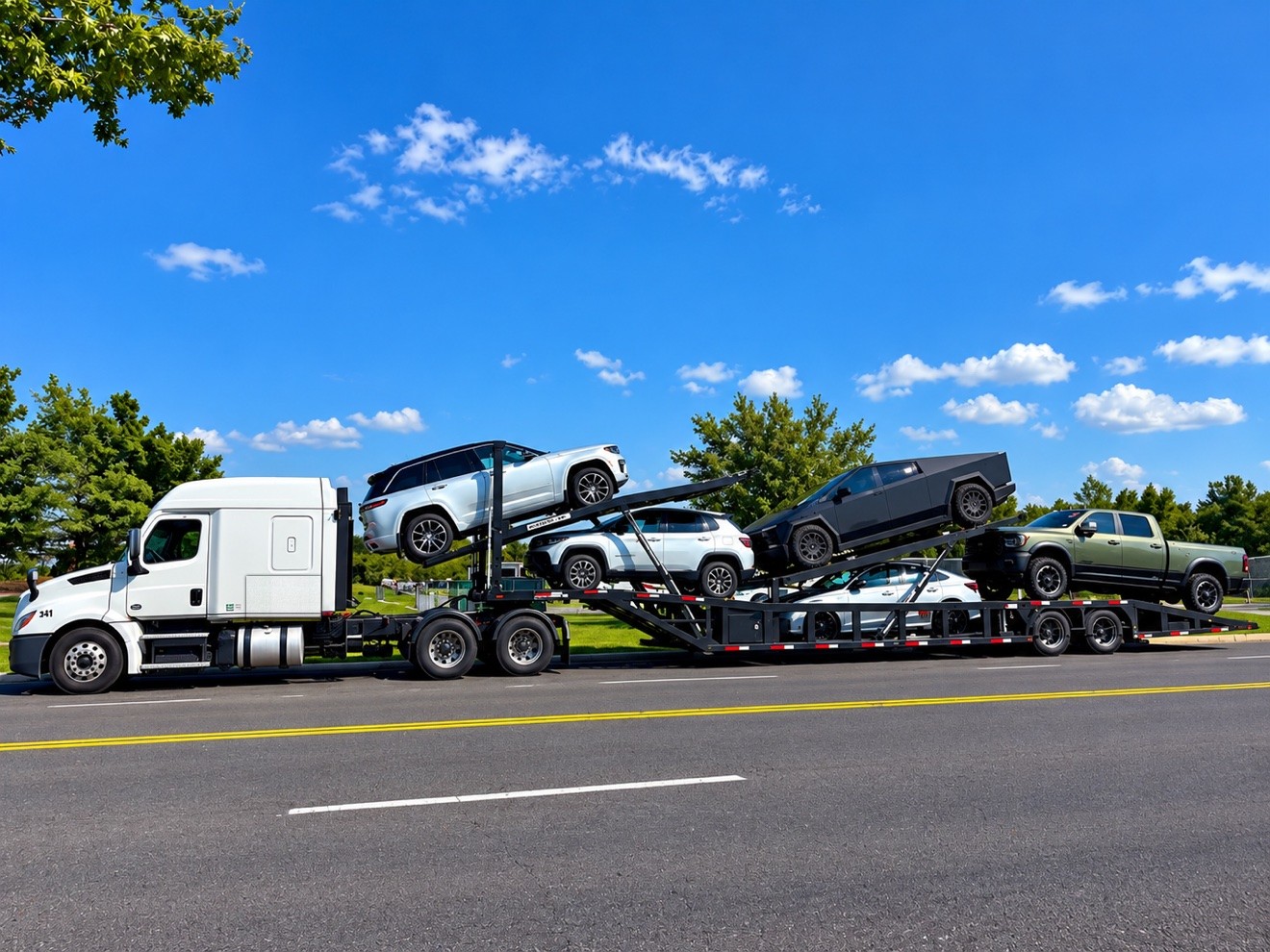
Two days decide how your shipment feels: the day the carrier picks your car up, and the day it comes off the trailer. Here is exactly what happens on both, step by step, so there are no surprises.
Most of the questions we hear about shipping a car are not about the price or the route. They are about two specific days. What happens when the truck comes for my car. What happens when it gets there. Who needs to be home. What do I sign. What do I pay, and how.
Those are fair questions, because pickup day and delivery day are the two moments you are personally part of. Everything between them is the carrier's job. This guide walks through both days in order, including the vehicle inspection that protects you at each end, the bill of lading you will sign twice, and the few things worth doing before the truck arrives. If you are still comparing companies, our post on why the cheapest auto transport quote is usually not the best deal explains how a quote turns into an actual pickup in the first place.
One thing to know up front. Freedom Transport Service is a brokerage. We arrange your shipment and assign a licensed, insured carrier to haul your car. The driver who arrives works for that carrier, and the steps below describe how a professional pickup and delivery run with any carrier we assign, anywhere in the 49 states we serve.
Before pickup day: getting your car ready
Once a carrier is assigned to your shipment, you will hear from us with the carrier's name and your pickup window. The driver will also call you directly as the day gets close, usually a few hours before arrival and sometimes the evening before. Keep your phone nearby during the window. A short list of preparation makes the day itself go smoothly.
- Wash the car, or at least knock the dirt off it. The pickup inspection produces a written condition report, and dirt hides scratches and chips. A reasonably clean car gets an honest report, and an honest report protects you at delivery.
- Photograph the car from every side, including the roof, the wheels, and any existing dings or scratches. Photos on your phone take two minutes and give you your own record to go with the driver's paperwork.
- Take out anything that should not ride in the car. You may pack up to 100 pounds of personal items in a box or suitcase, stored in the cargo area and underneath the window line. Personal items are not covered the way the vehicle itself is, so documents, electronics, medications, and anything you cannot replace should travel with you, not in the trunk.
- Disable aftermarket alarms and remove toll tags. An alarm that keeps triggering on a loaded trailer drains the battery for days. A toll tag left in the windshield charges your account for the carrier's whole route.
- Leave about a quarter tank of fuel. That is plenty for loading, unloading, and short moves at each end, without hauling a full tank of extra weight across the country.
- Have a set of keys ready for the driver, and make sure an adult, 18 or older, can be there to release the vehicle and sign the pickup paperwork. It does not have to be you. A spouse, a family member, a coworker, or a dealership contact can release the car, as long as we know in advance who it will be.
It also helps to think about where the truck will stand. A loaded car carrier is a long vehicle, and some residential streets, gates, and cul-de-sacs cannot take one safely. If access at your address is tight, the driver may ask to meet at a wider street or a nearby parking lot. That is routine, and it protects your car and every other car on the trailer.
Pickup day, step by step
Step 1. The driver calls ahead. Expect a call when the carrier is getting close, so you are not waiting by the window all day. If you need to shift the meeting spot because of the truck's size, this call is when it gets sorted out.
Step 2. You and the driver inspect the car together. This is the most important part of pickup day. The driver walks around the vehicle and records its condition on the bill of lading, noting every existing scratch, ding, chip, and dent, along with the mileage. Walk with the driver, point out anything you know about, and make sure it is written down. That condition report is the baseline your car is compared against at delivery, and it is the document any claim would stand on. We go deeper on this document in our guide to why the bill of lading matters in auto transport.
Step 3. You sign the pickup paperwork and keep your copy. Your signature at pickup confirms the car and its recorded condition. Keep the copy you are given, or take a clear photo of it, and hold onto it until after delivery. It takes ten seconds and it is the other half of your protection.
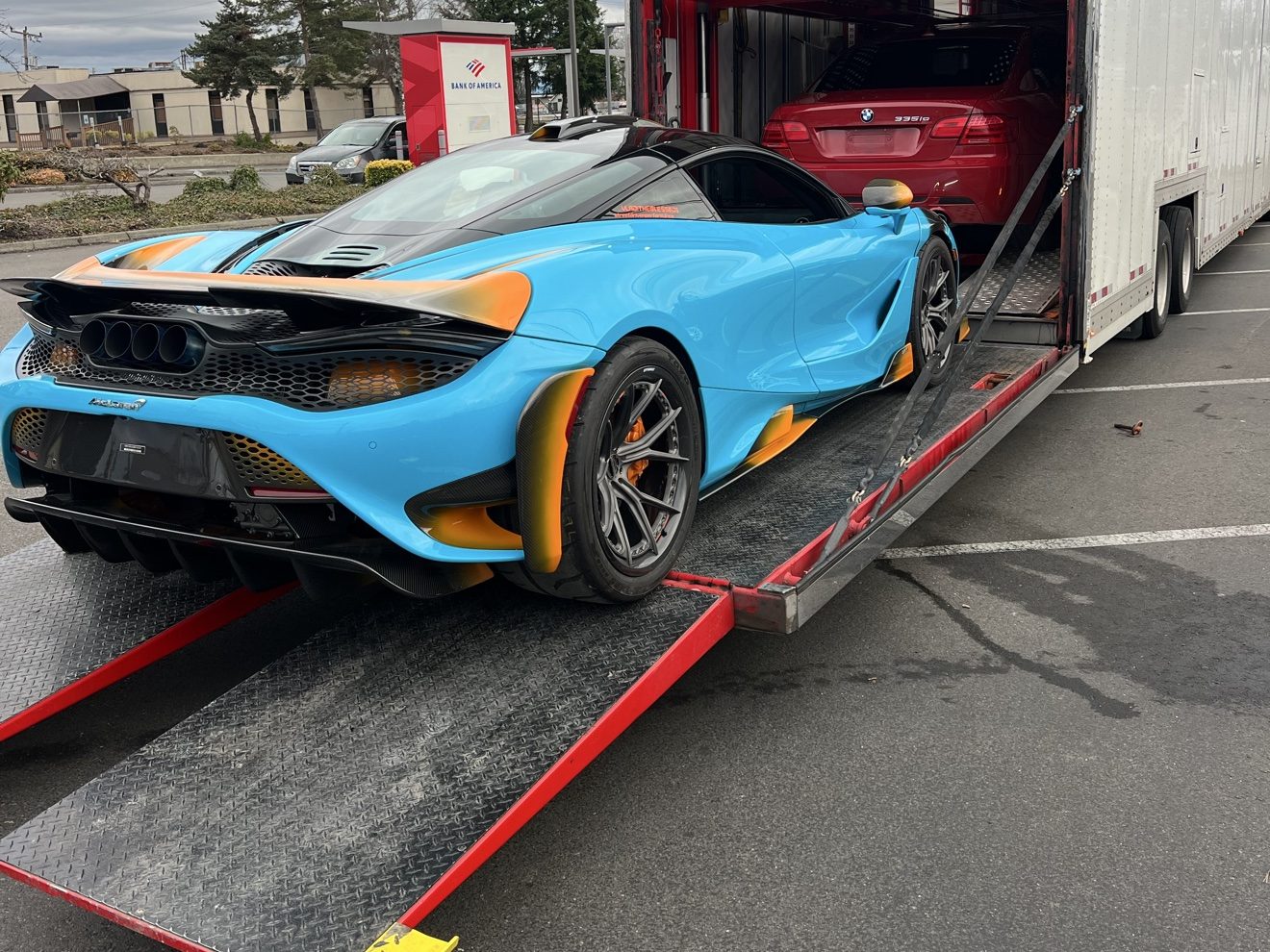
Step 4. The car is loaded and secured. The driver loads your vehicle onto the carrier, straps it down, and makes a final check of the load before rolling. Loading one car takes only a few minutes once the inspection is done. Most pickups, inspection and paperwork included, run about 30 to 45 minutes from the time the truck arrives.
Step 5. Nothing is due at the curb. With Freedom, your deposit is charged when a carrier is assigned to your shipment, which happens before pickup day. The driver collects nothing at pickup. If anyone at your curb asks for payment beyond what your booking says, call us at 800-507-2629 before handing over a dollar.
While your car is in transit
Carriers cover roughly 500 miles a day, so a cross-country shipment is a matter of days on the road, with your car sharing the trailer with other vehicles being picked up and delivered along the route. That routing is also why delivery dates are given as a window that firms up as the truck gets closer, rather than a guaranteed hour days in advance.
You can follow the trip through us. We share the carrier's last reported position, along with the time it was reported and the current delivery estimate. That is worth describing honestly: carriers report their position as they check in along the route, so what you see is the last reported position, not a live GPS dot moving on a map. If you want the freshest word, call us at 800-507-2629 and we will tell you exactly what the carrier last reported.
If your own plans change while the car is on the road, call us as early as you can. A delivery contact change or a timing problem is usually easy to solve with a day's notice and much harder to solve when the truck is already in your destination city.
Delivery day, step by step
Step 1. The driver calls ahead to set the meeting. As at pickup, the truck parks where it fits safely, which may be a wide street or a lot near your address. The person receiving the car needs to be an adult, 18 or older, and it can be someone other than you if you arranged that with us.
Step 2. The car comes off the trailer. The driver unloads your vehicle and brings it to you. Give the driver room to work, and wait for the car to be fully off and parked before you start looking it over.
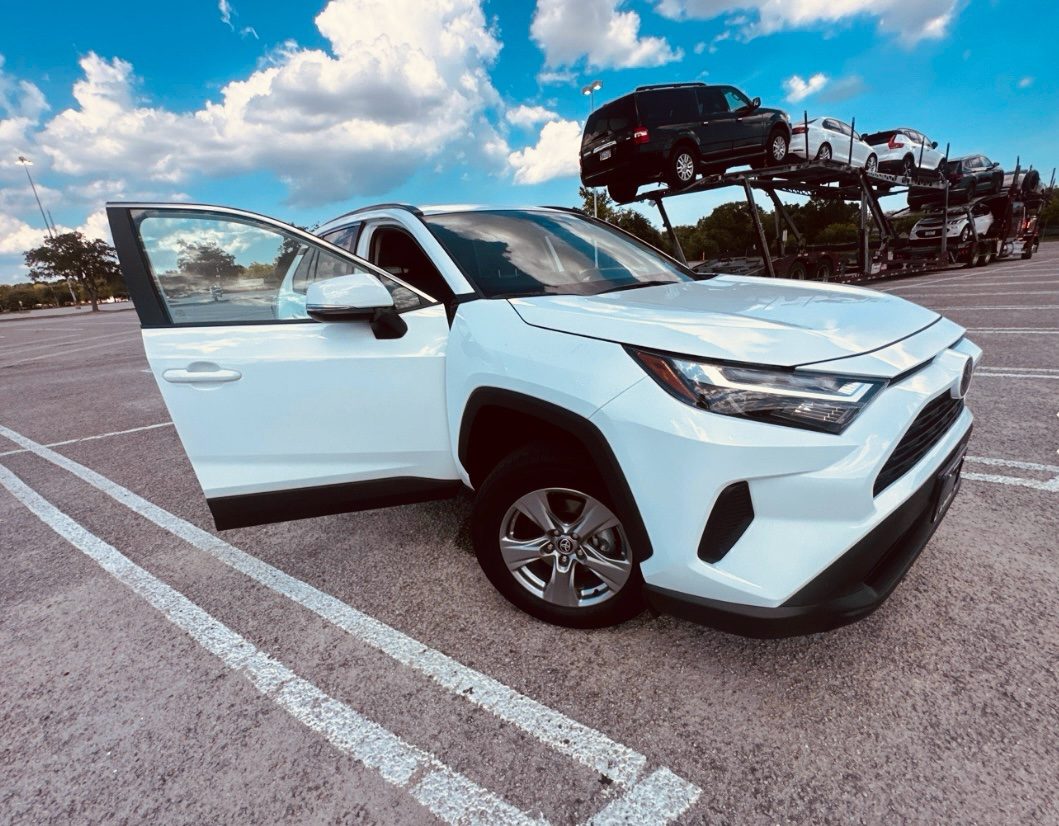
Step 3. Inspect the car before you sign anything. This is the most important step of the entire shipment. Take the delivery paperwork in hand and walk around the car, comparing what you see against the condition report from pickup. Check the same panels the pickup inspection recorded, look along the sides in good light if you can, and check the roof and the wheels. Take your time. The driver expects a careful inspection, because it is part of the job, and a few unhurried minutes here are what the whole paperwork system exists for.
Step 4. Pay the balance, if your plan has one. On the cash plan, the remaining balance is paid to the carrier at delivery. Carriers accept cash, Zelle, Venmo, Cash App, or a cashier's check made payable to the carrier. Carriers never accept credit or debit cards at delivery, so have your payment arranged before the truck arrives. On the card plan, there is no balance at delivery. Your payment was handled by card, and the driver collects nothing.
Step 5. Sign, keep your copy, and take your keys. Once the inspection is done and any notes are written on the paperwork, you sign the delivery receipt, keep your copy with your pickup copy, and the shipment is complete. If everything matches the pickup report, which is how the large majority of deliveries go, this step takes a minute.
If something looks wrong at delivery
Damage during transport is uncommon, but it happens, and the first ten minutes after you spot it decide how smoothly it gets resolved. Here is the order that protects you.
Accept the car. Refusing delivery does not help you and can create storage problems. Instead, write what you found on the delivery paperwork, in plain words, before you sign it. A note like "new scratch on driver door, not on pickup report" is exactly what is needed. Then take clear photos of the damage, a few angles, and a photo of the signed paperwork itself. Finally, call us at 800-507-2629 the same day if you can, and we will walk you through the next steps.
Every shipment booked through Freedom includes insurance coverage through the assigned carrier. A claim is built on two documents: the pickup condition report, which shows how the car left, and your delivery paperwork with the damage noted before signing, which shows how it arrived. That is why the inspection steps in this guide matter so much. Five careful minutes at each end turn a claim into a straightforward process instead of an argument about when something happened.
One signature warning, because it is the mistake we see most often: a delivery receipt signed with no notes on it says the car arrived in the condition it left in. If something is wrong, the time to write it down is before that signature, while the driver is standing there. After the truck leaves, call us anyway. We will still help you. But the noted paperwork makes everything faster and stronger.
Frequently asked questions
Do I have to be there in person for pickup and delivery?
No. An adult, 18 or older, needs to be present at each end to release the car, receive it, and sign the paperwork. It can be a spouse, a family member, a friend, a coworker, or a dealership contact. Just tell us who it will be, so the driver is not guessing when the truck arrives.
How long do pickup and delivery take?
Plan on about 30 to 45 minutes at each end. Most of that time is the condition inspection and the paperwork. Loading and unloading the vehicle itself is usually the quick part.
What can I leave in the car during shipping?
You can pack up to 100 pounds of personal items in a box or suitcase, stored in the cargo area and underneath the window line. Personal items are not covered the way the vehicle itself is, so keep documents, electronics, and anything you cannot replace with you. Before the truck arrives, disable aftermarket alarms and remove toll tags.
How do I pay the balance at delivery?
On the cash plan, the balance is paid to the carrier at delivery by cash, Zelle, Venmo, Cash App, or a cashier's check made payable to the carrier. Carriers never accept credit or debit cards at delivery, so have your payment ready before the truck arrives. On the card plan, there is no balance at delivery at all.
Can I track my car while it is being shipped?
You can follow its progress through us. We share the carrier's last reported position and the current estimated delivery window, and you can call us at 800-507-2629 for the latest update. Carriers do not provide live GPS tracking, so be careful with any company that promises you a live map.
What if my car is damaged during shipping?
Note the damage on the delivery paperwork before you sign it, take clear photos, keep your copy of the paperwork, and call us at 800-507-2629 the same day. Every shipment includes insurance coverage through the carrier, and the pickup condition report together with your noted delivery paperwork is what a claim is built on.
When you are ready to ship, get a quote and a real person on our team will verify it against the current market for your route before you book. Our services page lays out open, enclosed, and expedited transport, and our general FAQ page covers the questions this post did not. We arrange shipments in 49 states, every state except Alaska, and pickup and delivery day run the same way in all of them: a careful inspection, honest paperwork, and no surprises.
Get a free quote
Tell us where your vehicle starts and where it is headed, and we will price the move as it actually is. Nothing is due until we assign your carrier.
Photo credits: all photos are Freedom Transport Service photos.